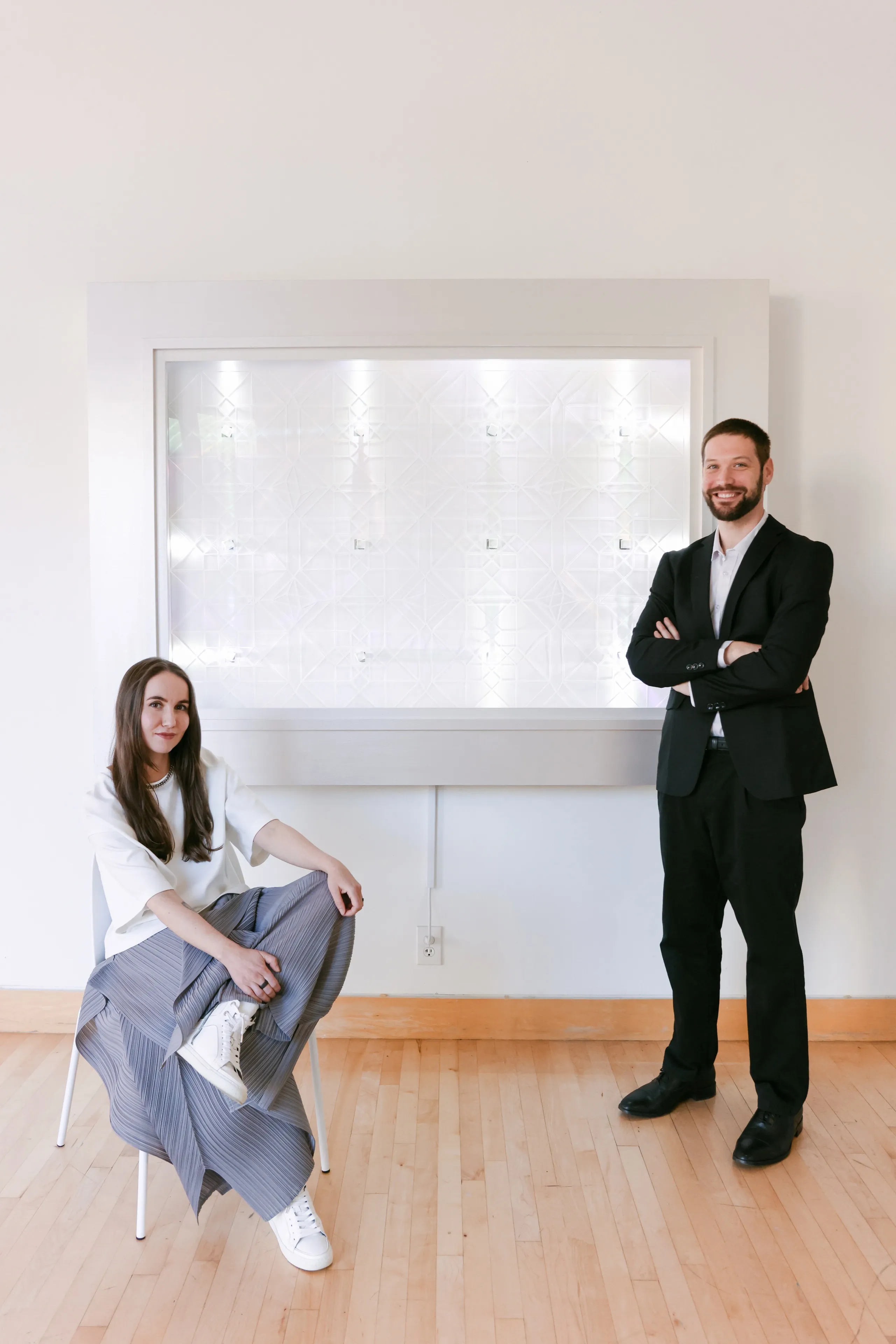
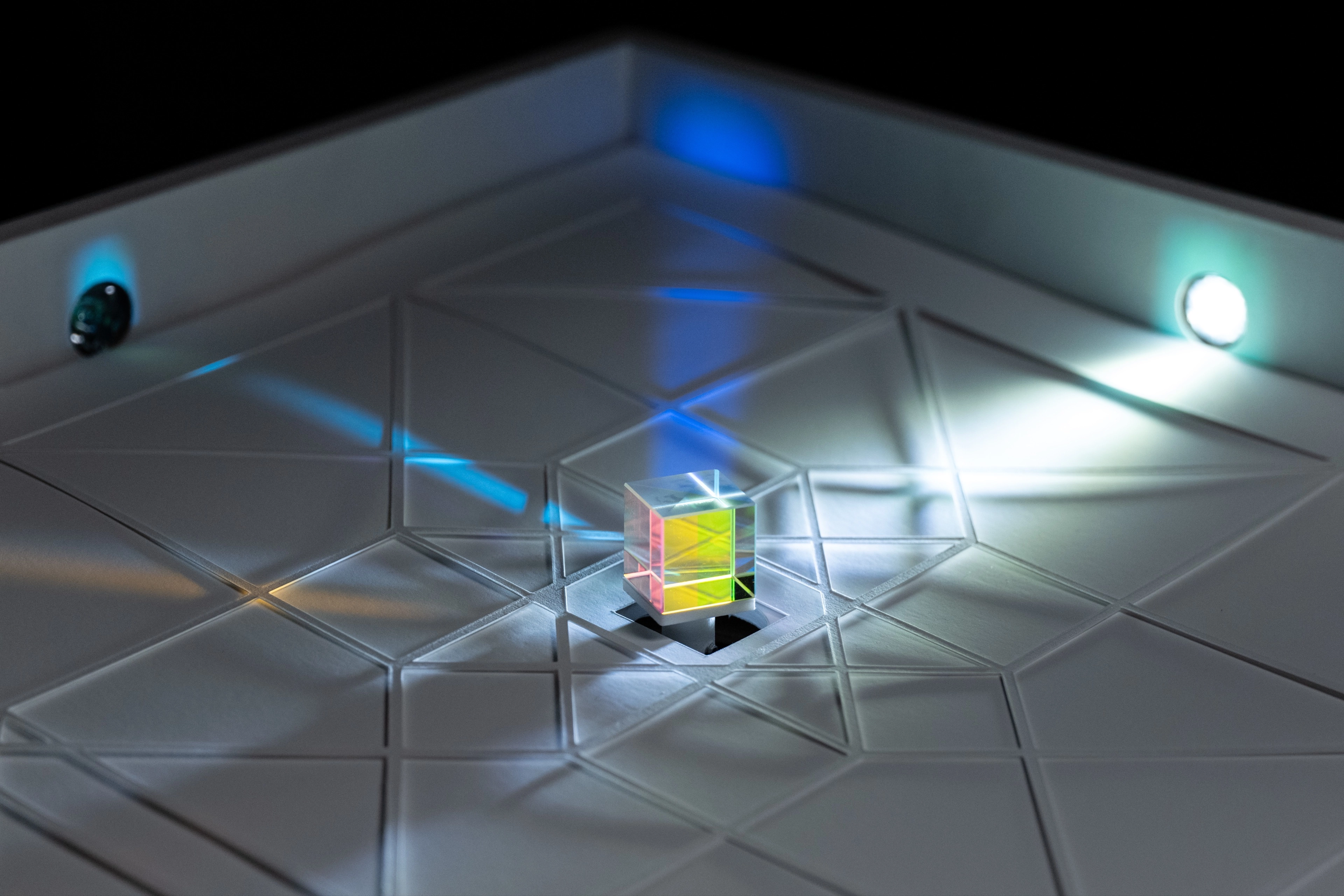
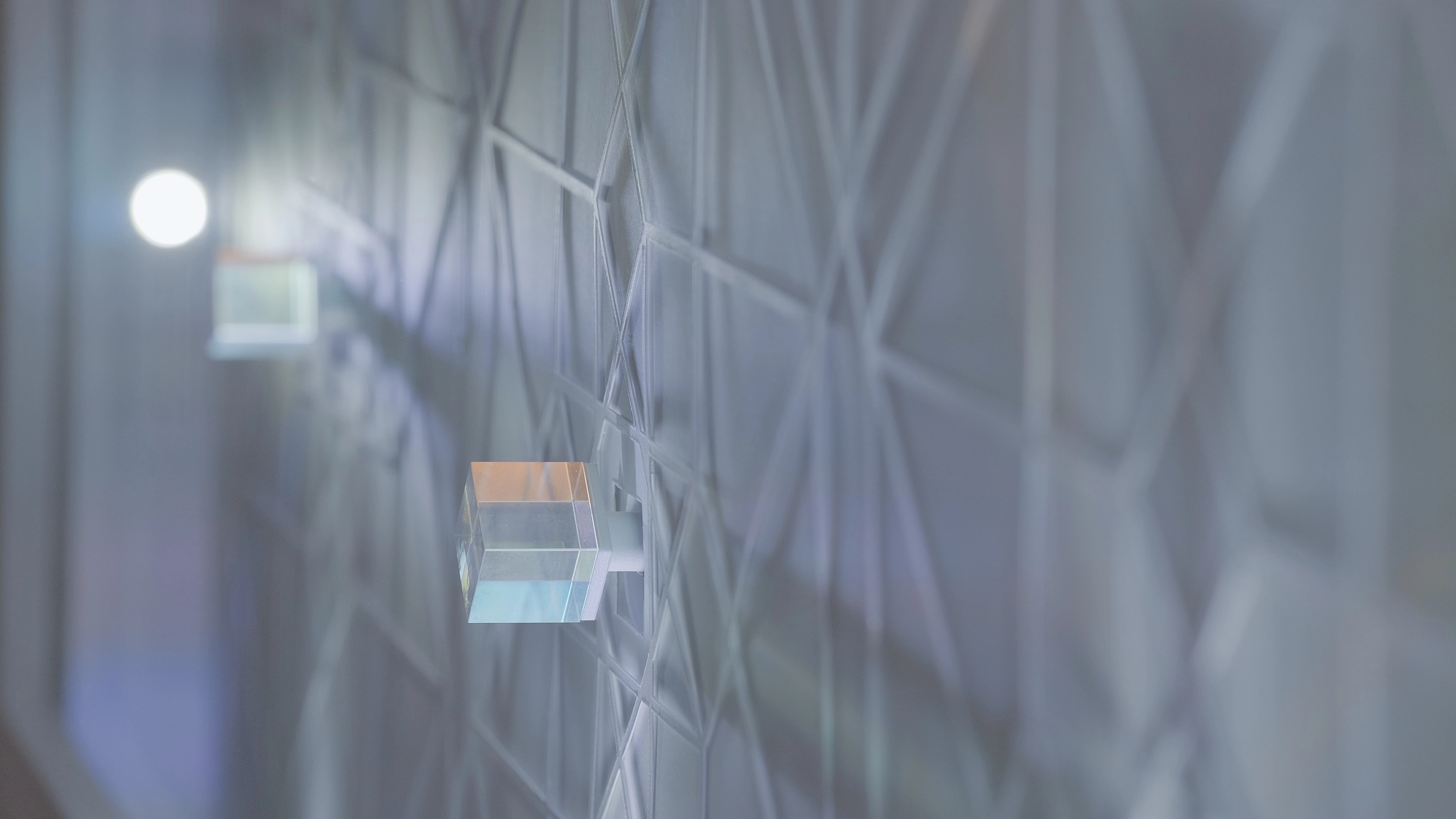
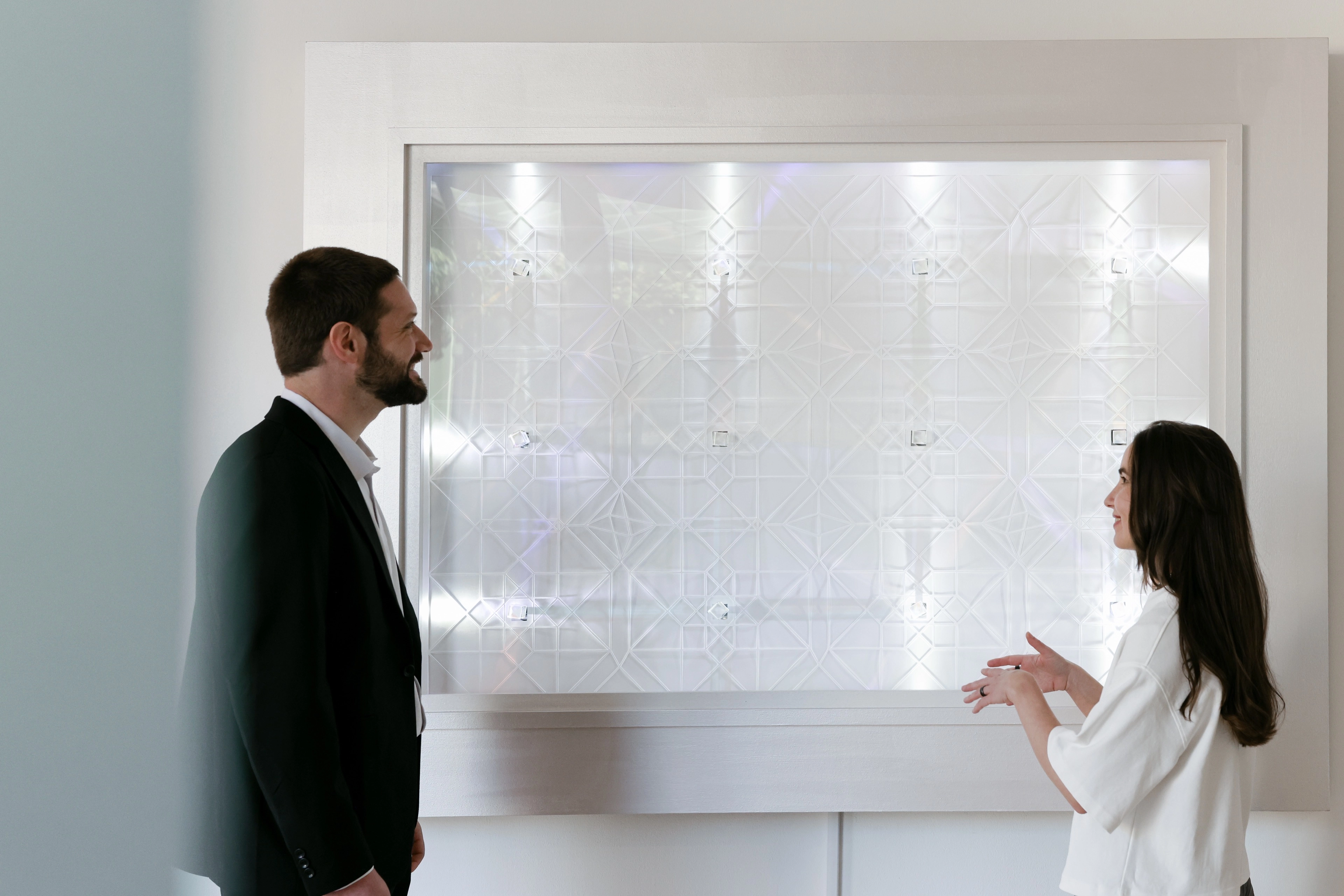
The goal was simple but ambitious: to teach a machine to feel. Lightwall is a collaboration between Zach Rattner and artistRita Susthat merges fine art, kinetic light, and real-time AI to create a living, breathing environment shaped by the people who stand before it. It bridges the gap between digital intelligence and physical reality, turning a static wall into a living presence.
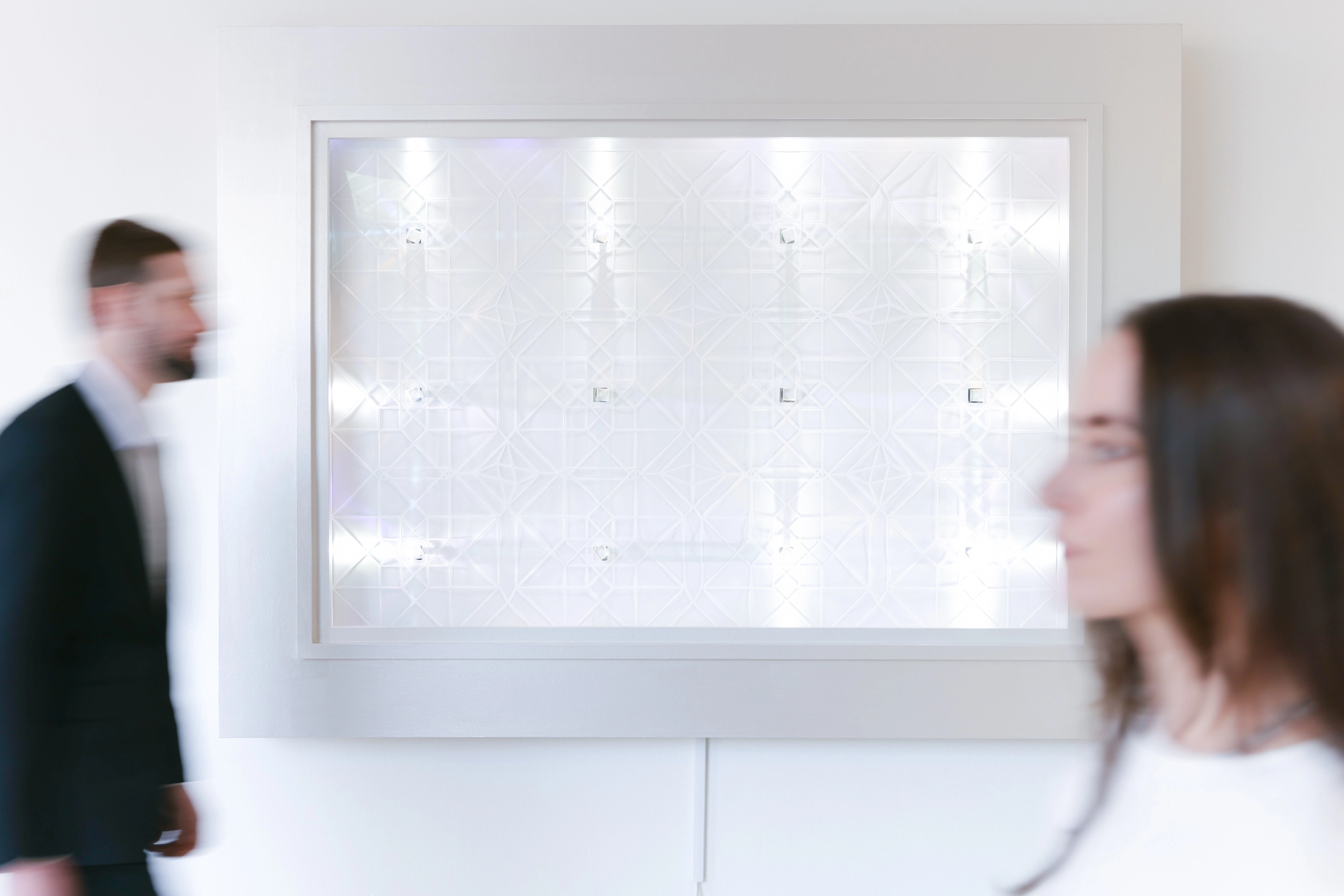
Unlike standard static installations, this composition responds to the visitor's movement and voice. When approached, the artwork shifts from an abstract array of geometric shapes and glass cubes to an entity actively engaging in dialogue.
Lightwall premiered at theCalifornia Center for the Arts Museum.
Collaborators
Lead Artist
Rita Sus
Technical Director
Zach Rattner
Engineering and Development
- Akshat Sureshbhai Desai
- Austin Nguyen
- Dr. Christopher Ryu
- Christian Aaron Marshall
- Dylan Michael Geraci
- Edmarck Osmin Sosa Pineda
- Jake Estrada
- Jose Rodrigo Aguilar Garcia
- Harry Le
- Steven Joseph Burroughs
- Uyen Hoang Thuc Tran
Fabrication
Art & Framing Solutions
Assembly
Zeke Rattner
Hope Rattner
Technologies
- LEDs
- Motors
- Radar
- Microphone
- Mac mini
Origin & Process
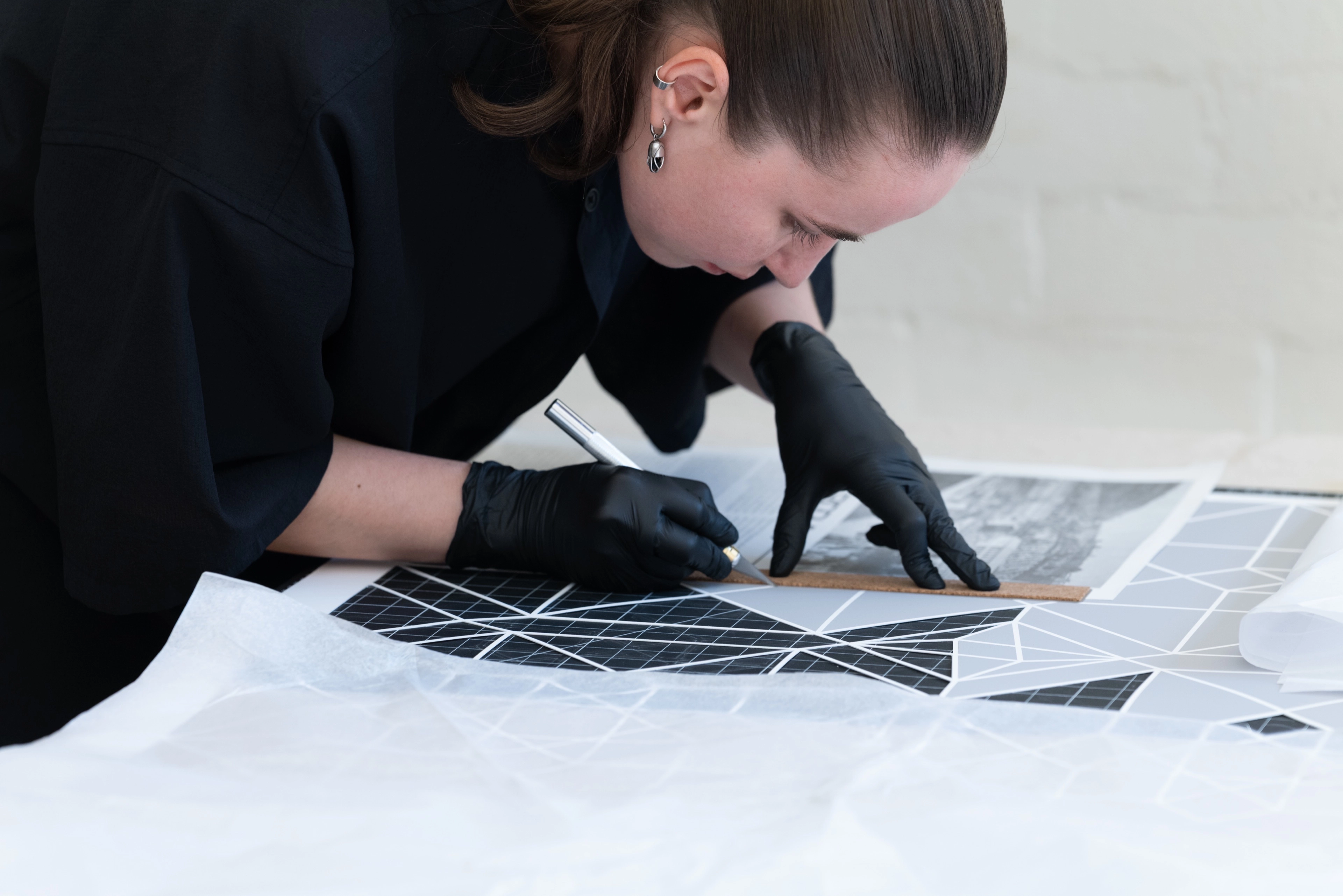
Rita and I sought to merge the tangible beauty of kinetic glass with the invisible power of real-time AI. Brought to life through an intensive collaboration with California State University Fullerton and the California Center for the Arts, the project evolved from experimental prototypes into a seamless, living installation.
A sign placed next to the piece simply invites visitors: "Talk to the wall. It's listening." When approached, Lightwall speaks back in a robotic, yet distinctly engaging voice. As recently featured in theOrange County Register, the installation actively invites users into an esoteric conversation about its purpose and identity. As Professor Christopher Ryu put it, "The art is responding to us."
The Interaction Model
Most AI experiences are fundamentally passive. You type a prompt into an empty text box on your phone and wait for the screen to blink back a response. We wanted to physically invert that relationship.
Instead of the human looking inside the machine, we designed the machine to look out at the human. Lightwall uses an advanced array of visual and acoustic sensors to map its immediate physical environment in real time.
Philosophy: Private & Offline
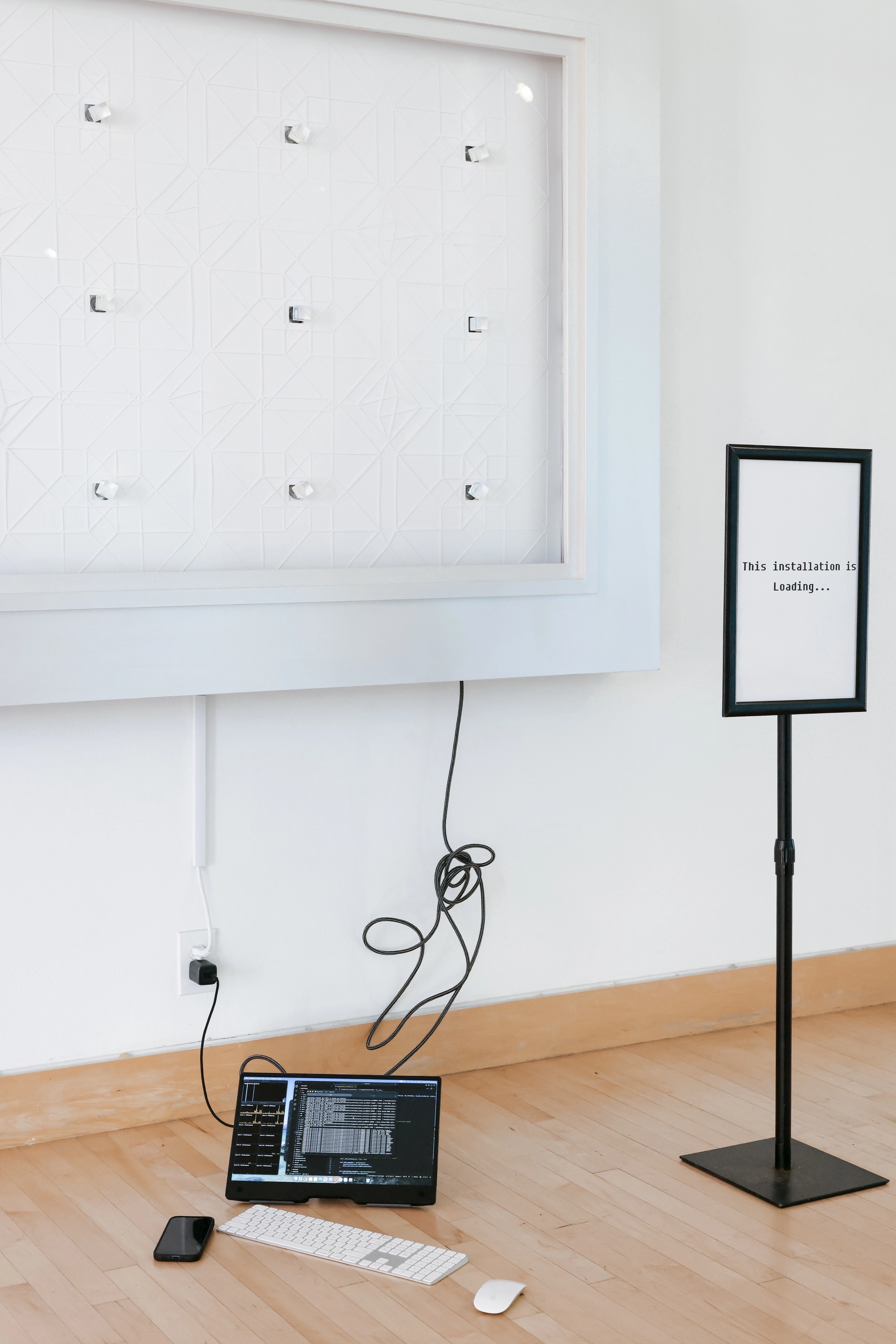
Lightwall is designed to see you, not to watch you. One of our design constraints was treating the user's data respectfully. By running entirely on-site off an inference cluster with no cloud connection, the installation creates a fleeting, private dialogue. Just like with a person.
- No traces left behind: It perceives movement, reacts instantly, and forgets. Every conversation dies the moment the visitor walks away.
- Highly portable: Because of the standalone inference architecture, the piece is entirely self-contained. It requires only standard AC power.
Lightwall is about using AI not to replace creativity, but to make human experiences richer.
If you're interested in booking Lightwall for an installation, exploring the open-source code behind our Apple silicon deployment, or learning more about the intersection of kinetic art and embedded AI, reach out to the team.